Service E-mail
vip@headse.com

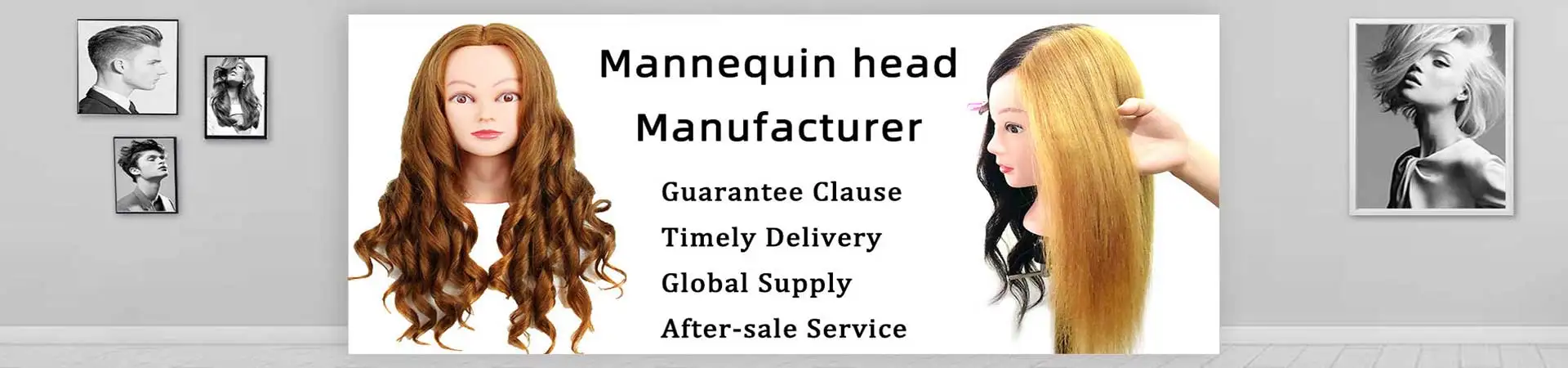


Headse, founded in 2015, is located in Xuchang City, Henan Province. It is a comprehensive wig and hair product enterprise integrating r&d, production and sales of wigs. With more than 4000 square meters of modern plant and complete, scientific quality management system.
The products sell well in European and American markets and have been supplying for many overseas big customers for many years. Because of the novel product style, stable quality, favored by the majority of customers.
The material identification of braided mannequin heads can be mainly achieved through three methods: burning test, tactile observation, and professional tool testing. These methods accurately distinguish between pure real hair, mixed real hair, and high-temperature synthetic fibers, preventing misleading advertising.Burning Test (Most Reliable): This is the most commonly used and intuitive identification method in the industry. It involves observing the ignition point, ash form, and smell of burning hair strands to determine the material.Pure Real Hair (Human Hair)Burning State: Burns slowly, with a burnt smell similar to burning hair (protein burning).Ash Characteristics: Loose, black powder that crumbles easily when rubbed between the fingers.Natural protein fiber, safe and non-toxic.High-Temperature Synthetic FiberBurning State: Melts and shrinks rapidly upon contact with fire, accompanied by a pungent plastic smell.Ash Characteristics: After cooling, it hardens into a lump that cannot be crumbled.Belongs to polyester fibers, which release harmful gases at high temperatures.Mixed Real Hair (Real Hair + High-Temperature Fiber)Burning State: Some hair strands burn into powder (real hair), while others melt into balls (synthetic fiber), producing a mixed odor.Key Points for Judgment: If two different burning results are observed in the same bundle of hair, it can generally be determined to be a mixed material.Safety Tips: When testing, take a small amount of hair, hold it in tweezers in a well-ventilated area, and ignite it, keeping it away from flammable materials.
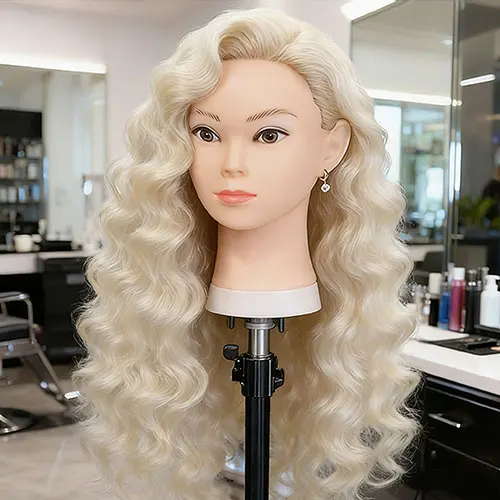
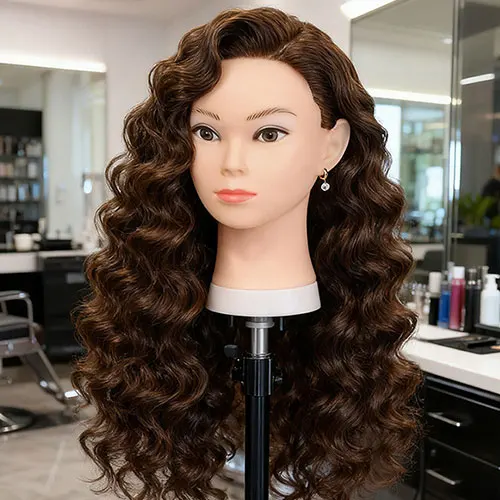
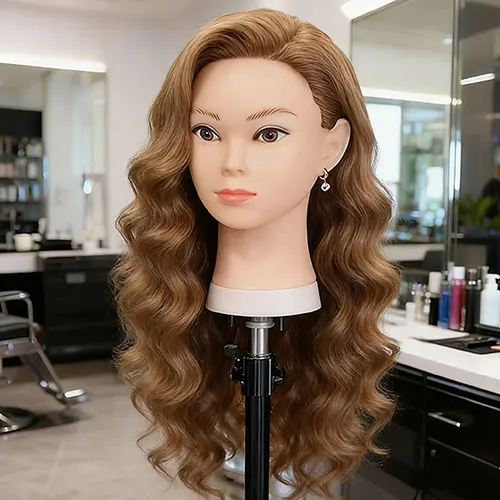
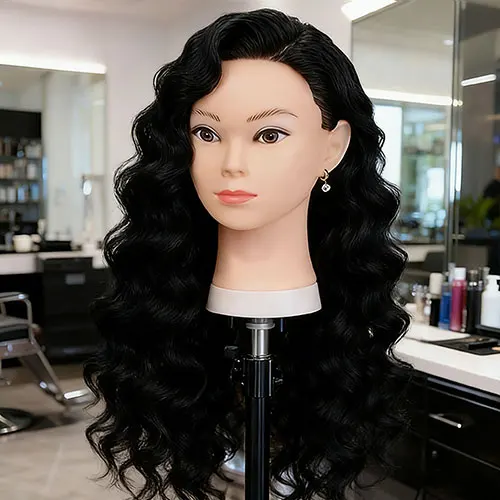
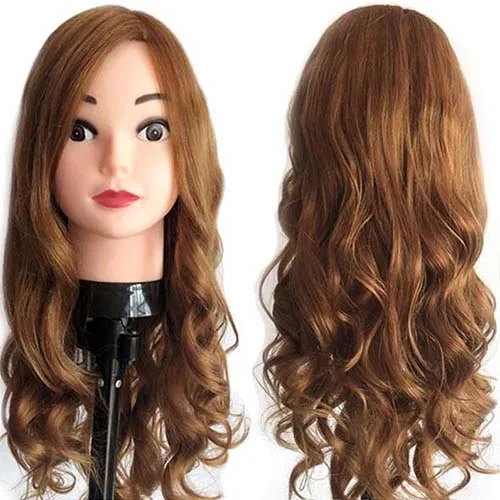
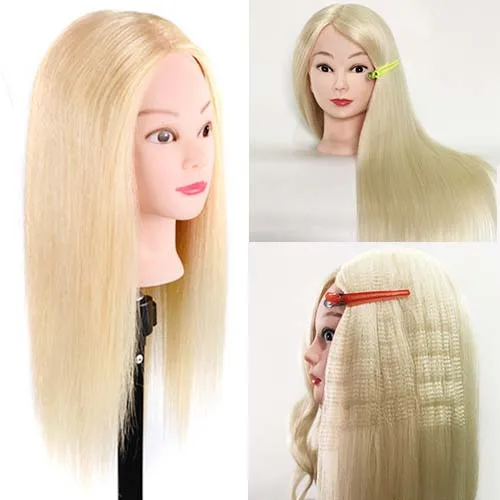
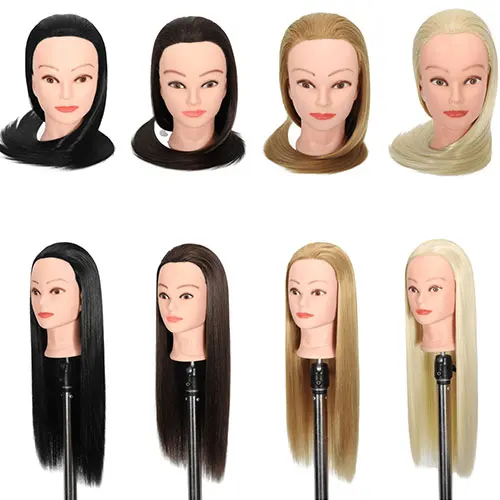
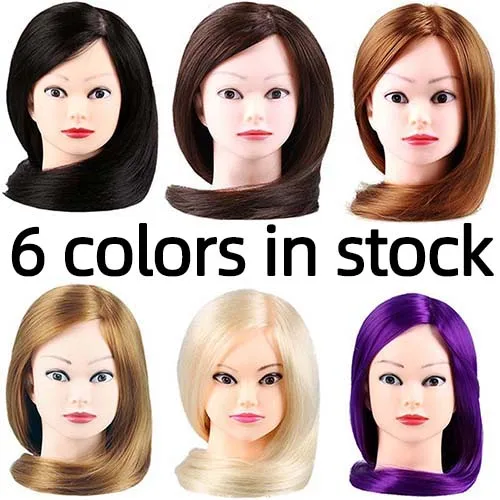
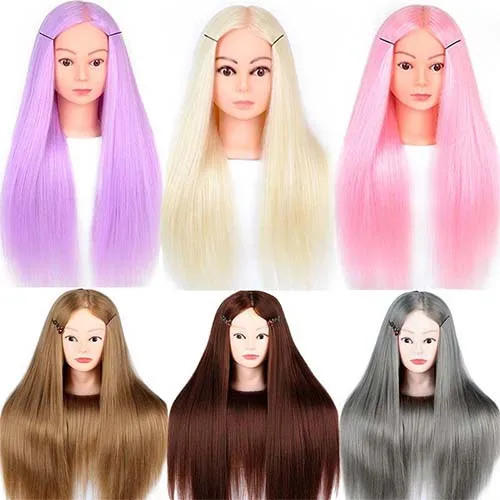
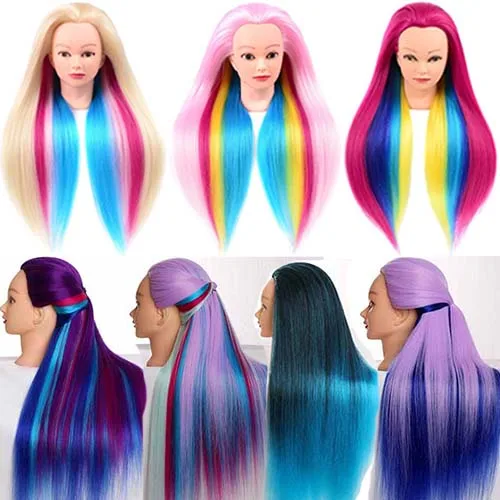
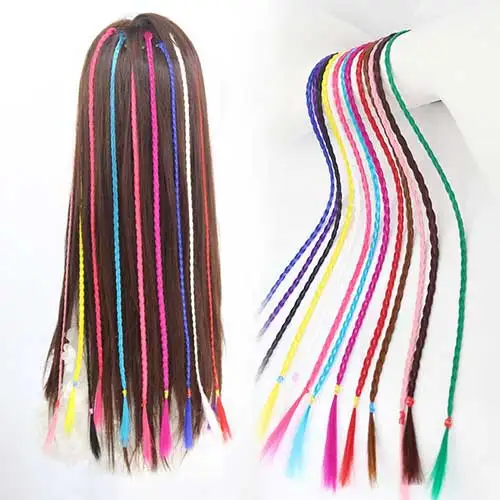
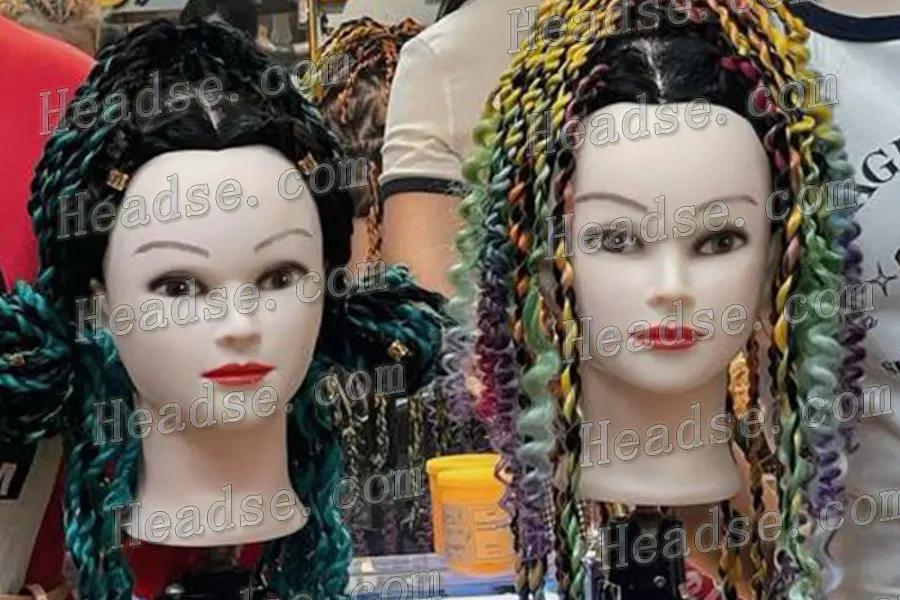
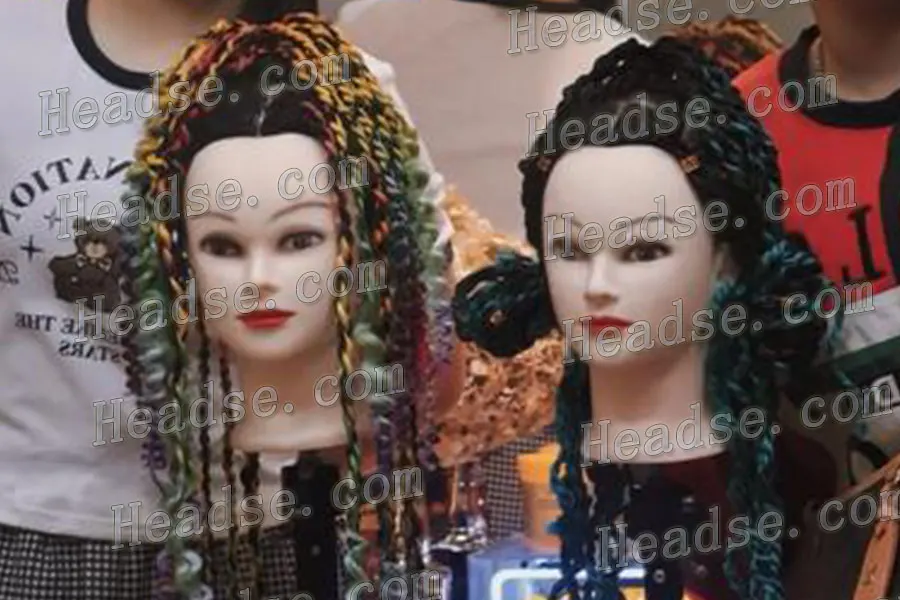
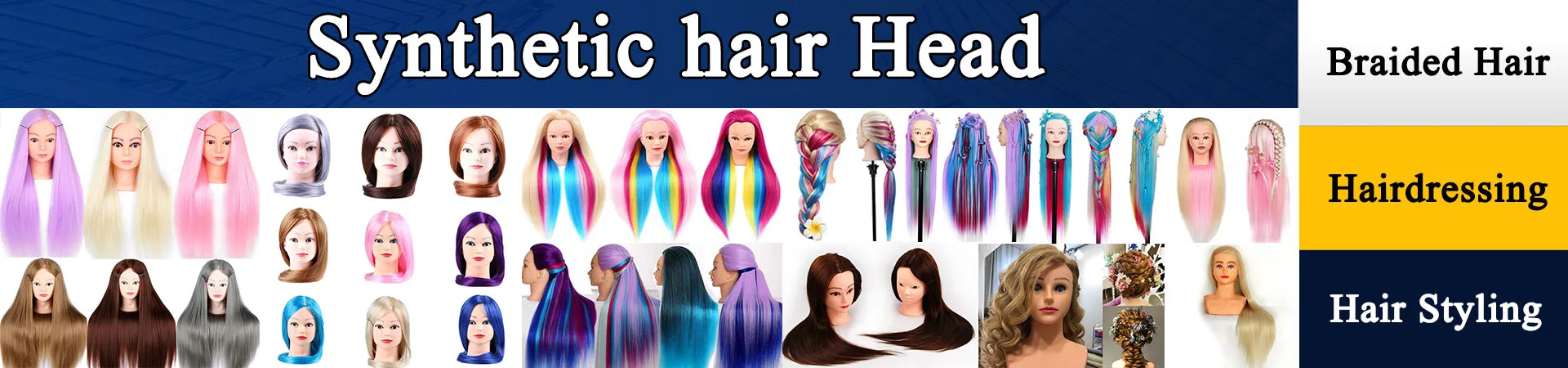
High-Temperature Fiber Braided Hair MannequinThis high-temperature fiber braided hair mannequin is made entirely of synthetic fibers. The hair strands are made of heat-resistant synthetic fibers, offering rich colors and a fixed style, suitable for basic braiding training and color matching practice.Affordable price, suitable for beginners or short-term use.Easy to care for, quick-drying after washing, no special care required.Limited heat resistance; easily damaged by high temperatures; long-term use may cause frizz and discoloration.
The key to maintaining a braided wig head lies in regular cleaning, proper combing, and proper storage to extend its lifespan and maintain the desired hairstyle. While the specific care methods vary slightly depending on the material (e.g., real hair, mixed hair, high-temperature fiber), the core principles remain the same.Daily Combing: Start from the ends and work your way upwards.Gently comb before and after each use to prevent tangles.Always start from the ends and comb upwards little by little. Do no
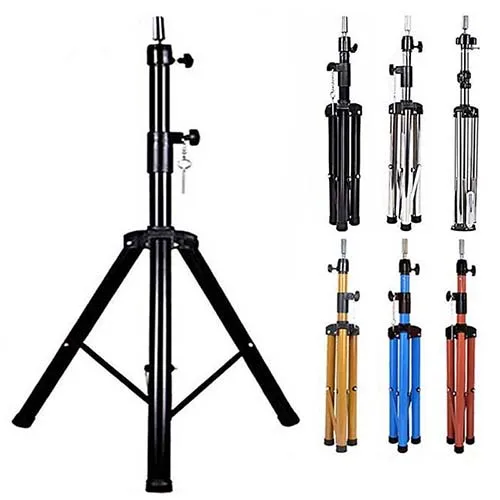
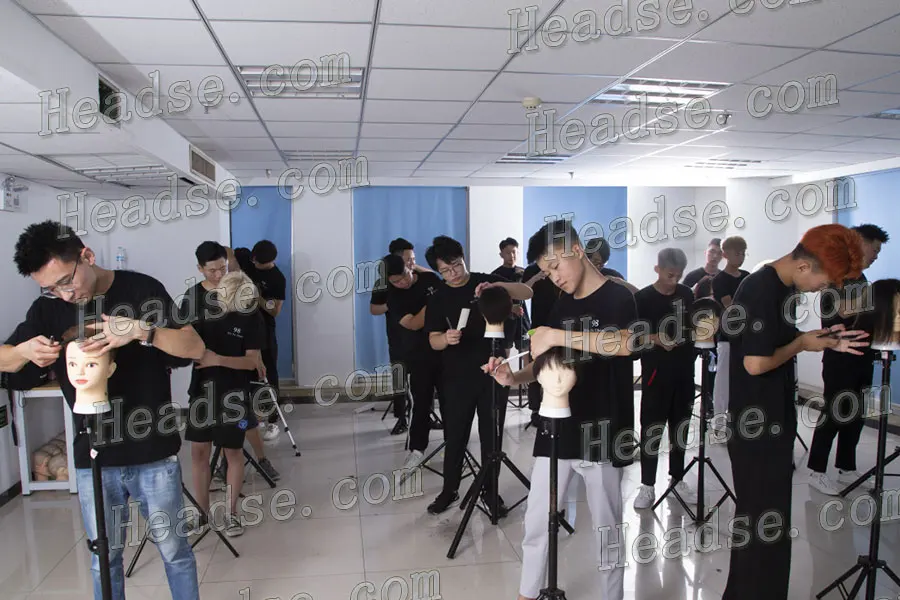
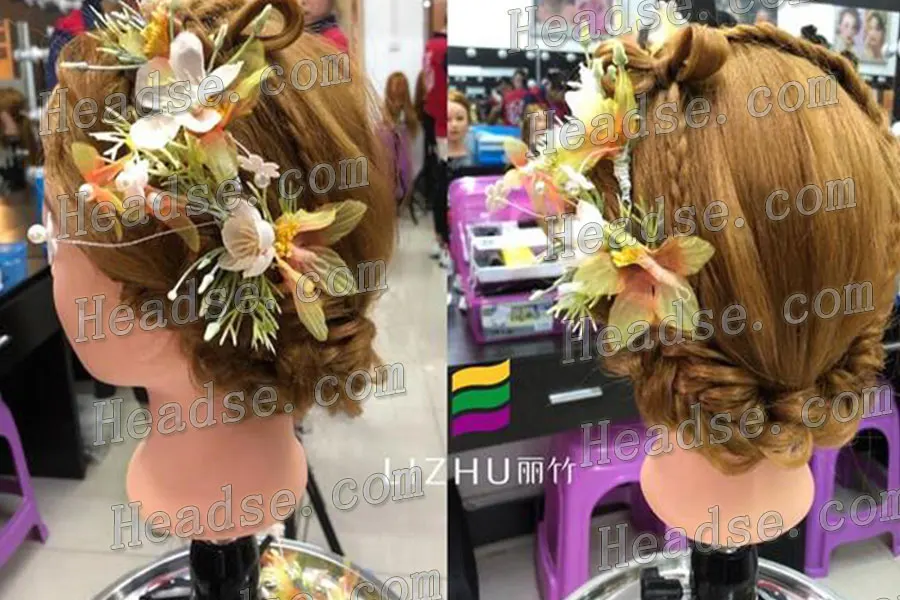
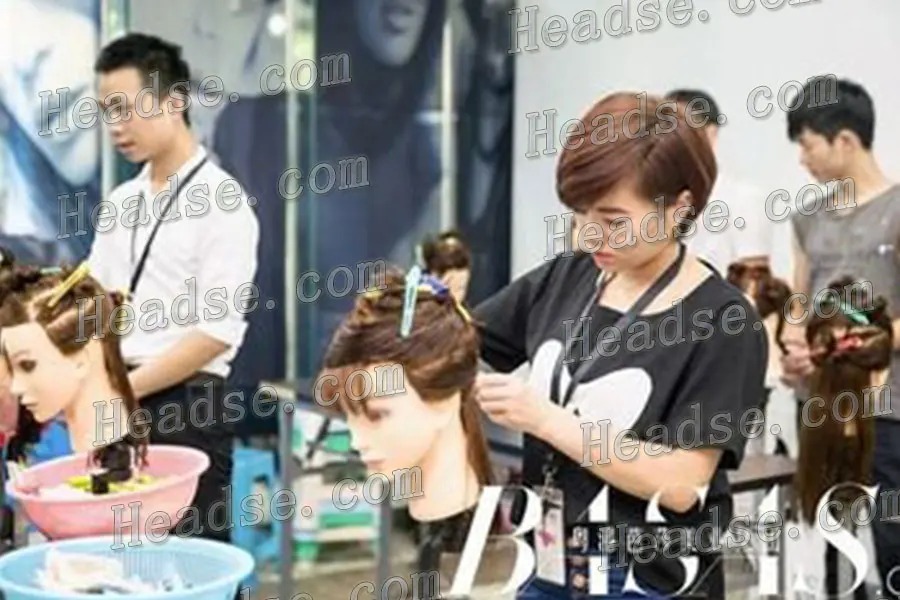
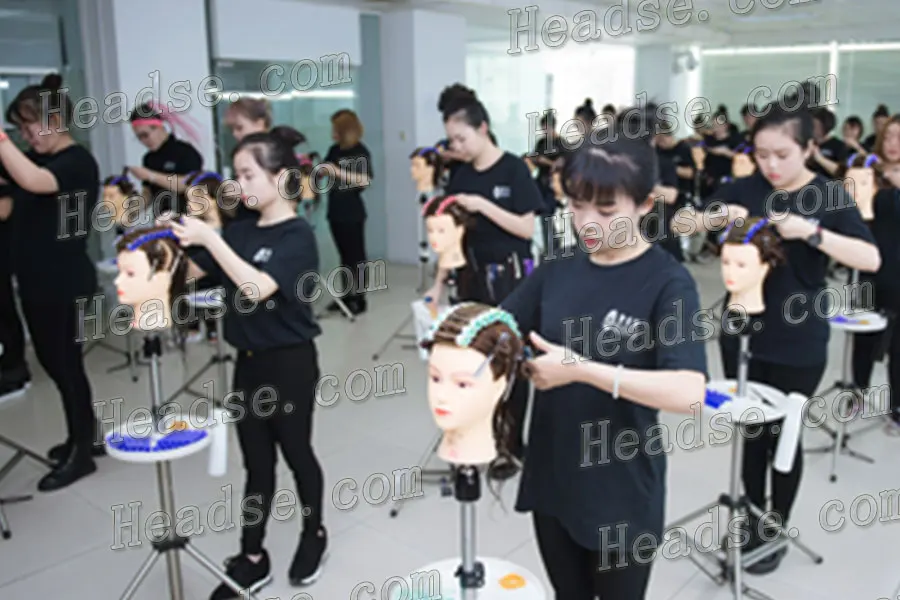
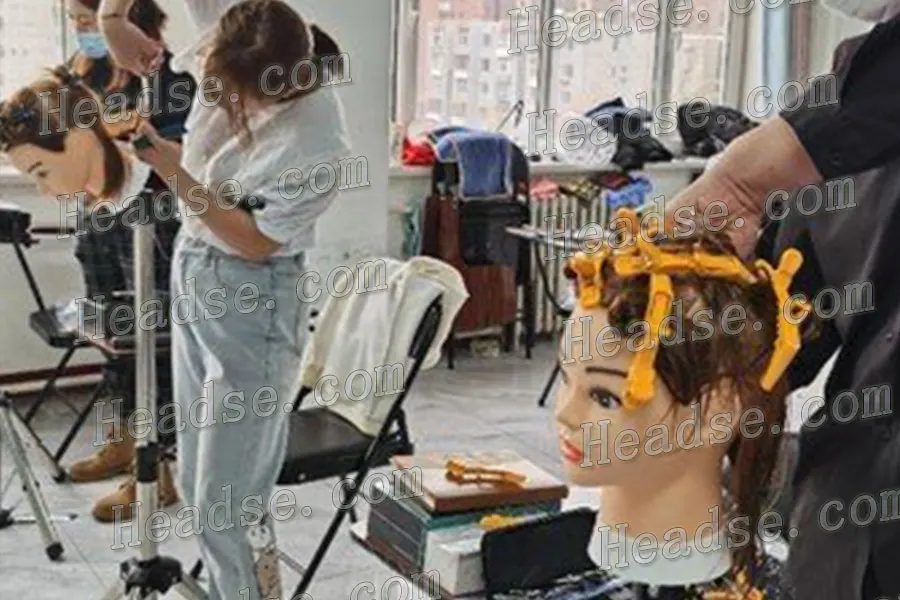
Braiding mannequins are hairdressing teaching tools specifically designed for practicing braiding, updos, and styling. They are widely used in hairdressing schools, barbershops for training, and for personal skill enhancement. These mannequins are typically made of heat-resistant fibers or a blend of real and synthetic hair, allowing for repeated curling, straightening, and braiding, helping users master various styling techniques.Based on material and purpose, they are mainly divided into the following c
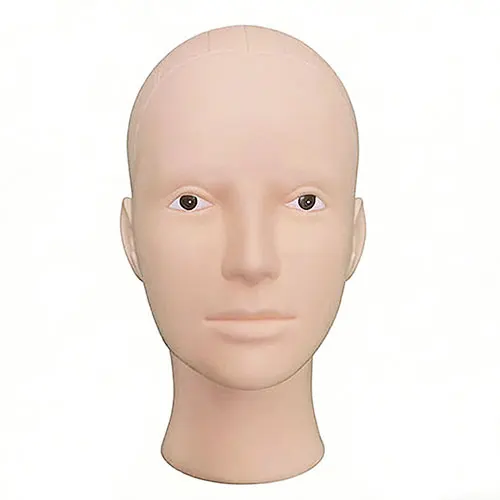
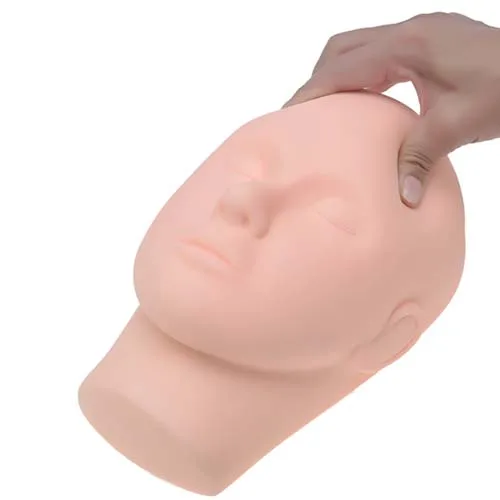
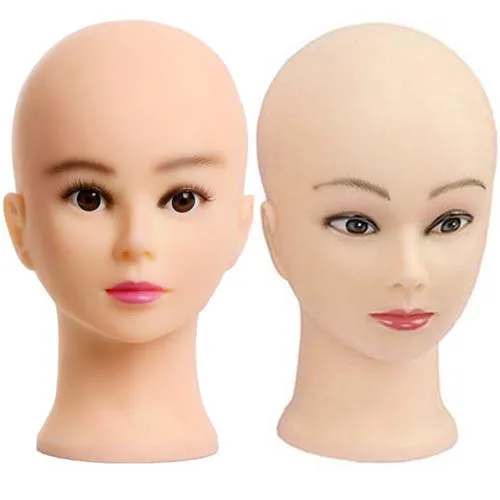
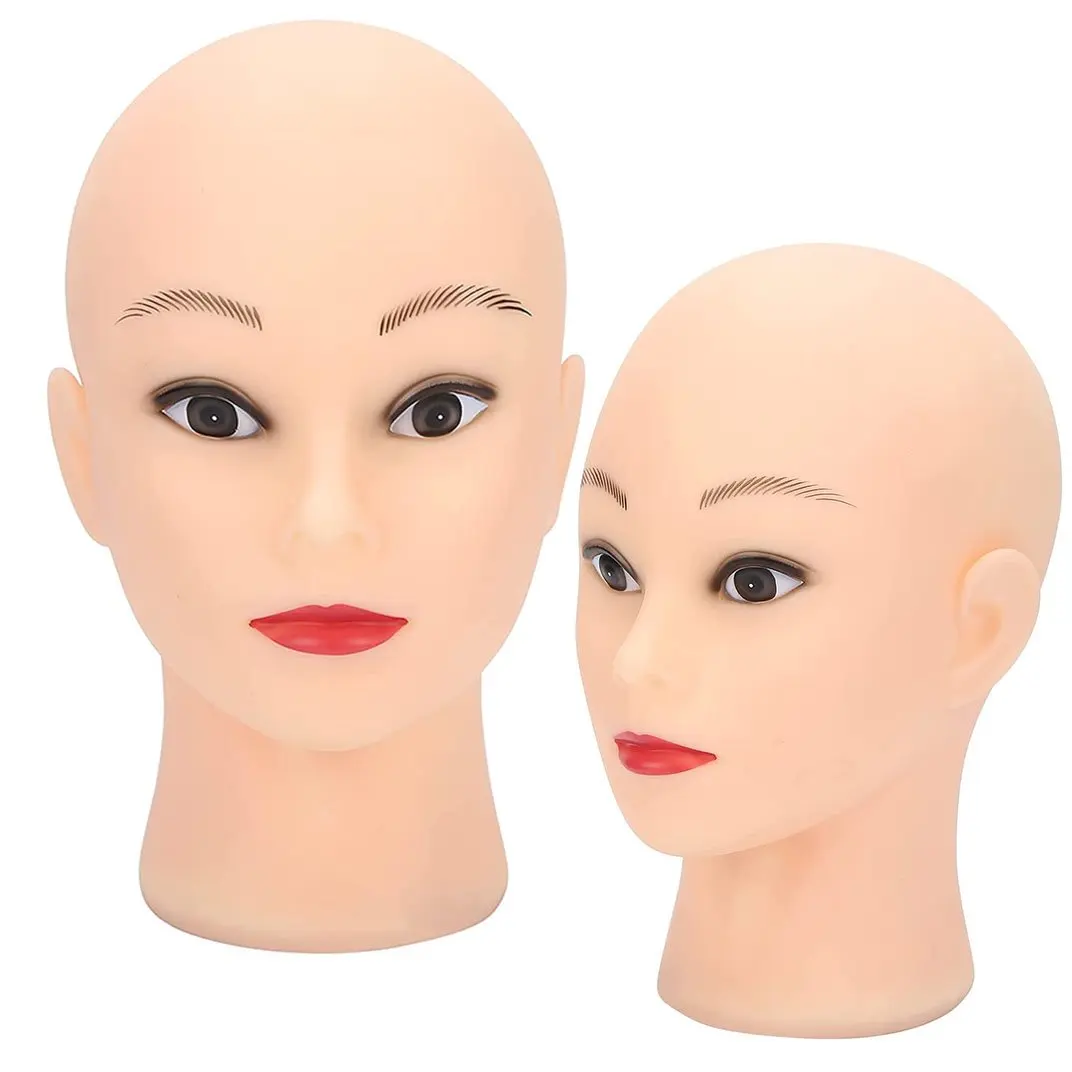
Display head molds are essential props for showcasing and styling wigs, hats, scarves, accessories, and other merchandise. They are widely used in hair salons, wig shops, clothing store windows, and personal styling experiments. Based on material, function, and design, they are mainly categorized into plaster, fiberglass, PVC, and silicone types.**Plaster Head Molds:** White in appearance, with a delicate texture, suitable for static displays, but relatively brittle and cannot be needled. Prices fluctuate with market changes.**Silicone Head Molds:** Like the "Celebrity Talk Show" style, made of soft silicone, they can be needled to secure hairstyles, offering a high degree of fit, suitable for anti-gravity styling, and provide a more natural look when wearing wigs.**Fiberglass Head Molds:** Sturdy and durable, mostly used for commercial displays, support wall-mounted installation, suitable for shop displays.**PVC/Plastic Head Molds:** Lightweight and affordable, commonly used in homes or small-scale displays, priced as low as a few yuan, suitable for frequent styling changes.
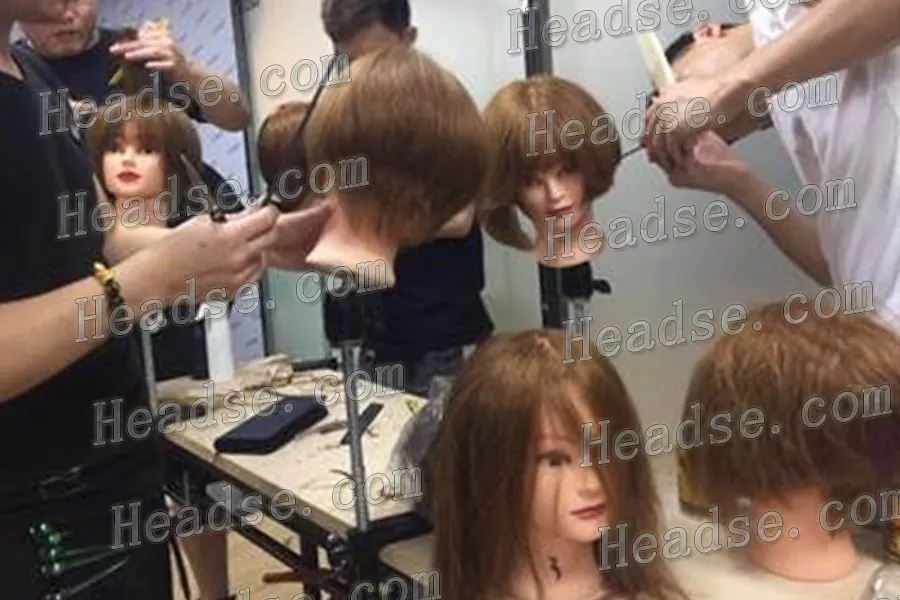
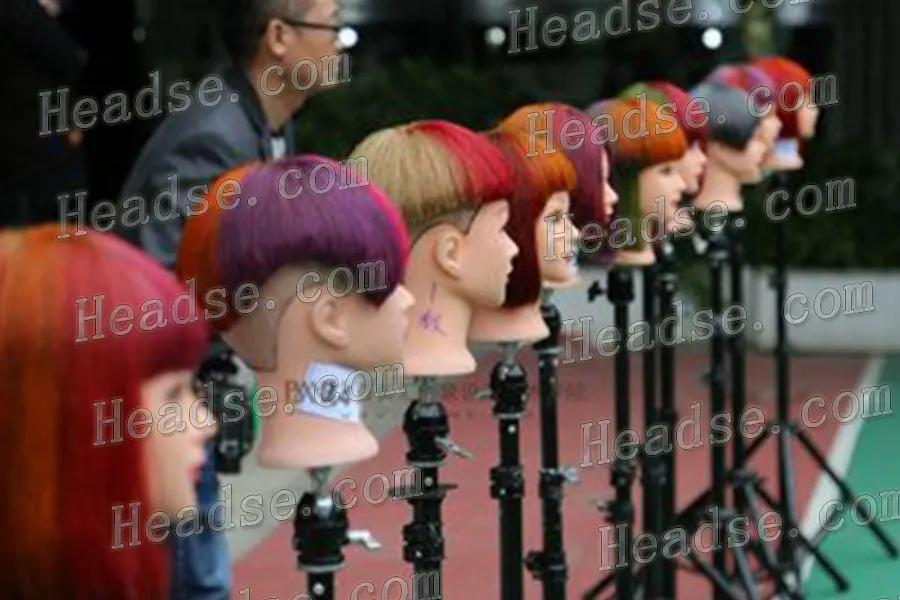
Synthetic Fiber Hair Mold: For Beginners and ShowcasesSuitable for: Beginners with no hair cutting experience, store displays, or teaching demonstrationsCore Advantages:Made entirely of synthetic fibers, rich colors, low price, suitable for bulk purchases.Durable, not prone to tangling, easy to maintain.Limitations:Cannot be dyed; chemicals will corrode the fibers.Feels slippery, lacking the resistance of real hair.Recommended Scenarios:Basic hair cutting practice (e.g., straight cuts, spot cuts, slide cuts)Style photography and shop window displaysClassroom demonstrationsPurchase Notes:Choose high-temperature fiber material that can withstand short-term heating with a curling iron (but not prolonged curling).Avoid purchasing styles with excessively thin hair, as this may affect the judgment of cutting layers.
Hybrid Hair Mold: A Cost-Effective Choice for Beginners and Advanced LearnersSuitable for: Students who have completed basic haircutting training and are starting to learn styling and coloring/permingCore Advantages:Mixed with real human hair and high-temperature fiber (common ratio 50%-80%), retaining some color absorption and heat resistance.Reusable with curling irons and straighteners, suitable for braiding, updos, and heat styling training.Lower cost than all-natural hair, suitable for frequent practice.Recommended Scenarios:Daily updo and braiding practice (e.g., Korean low bun, fishtail braid)Curling and heat setting operationsSectioning and application techniques before coloringPurchase Notes:Check if labeled "colorable"—some hybrid hair types are only heat-resistant and cannot be colored.Choose a root-strengthening version to enhance the realism of sectioning operations.
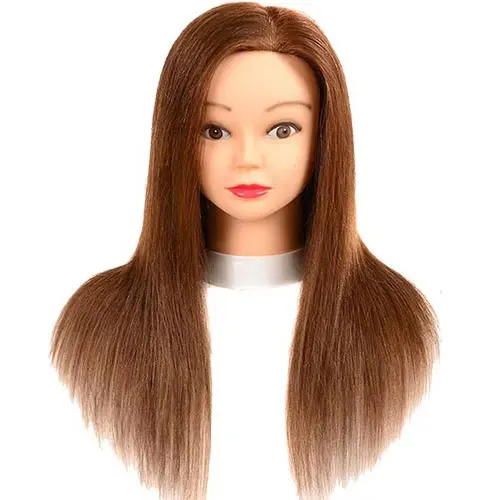
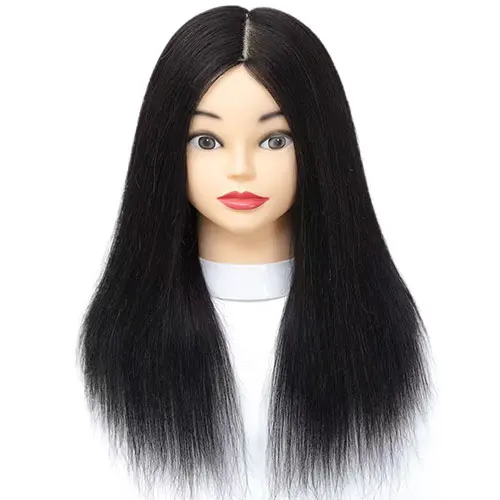
Choosing the right salon mannequin head is crucial, as it matches your practice goals, budget, and frequency of use. Here's a selection guide for different needs to help you pinpoint the most suitable one:Full-Length Real Hair Mannequin: The First Choice for Advanced Technical TrainingSuitable for: Students systematically learning integrated coloring, perming, and cutting techniquesCore Advantages:100% Real Human Hair, with intact cuticle structure, allowing for a full range of chemical and physical treatments including coloring, perming, bleaching, and cutting.Color development and chemical penetration speed are highly consistent with real human hair, making it an ideal medium for color courses and precision cutting training.Recommended Scenarios:Practical color mixing for hair coloring (e.g., milk tea brown, misty gray)High-Temperature Perming (Digital Perm, Ionic Perm) SimulationLayered Cutting Hand Feel TrainingPurchase Notes:Prioritize styles with shoulder design for easier standing operation and to simulate a real salon environment.
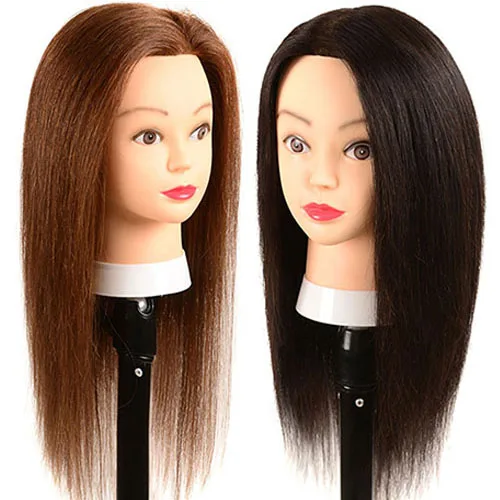
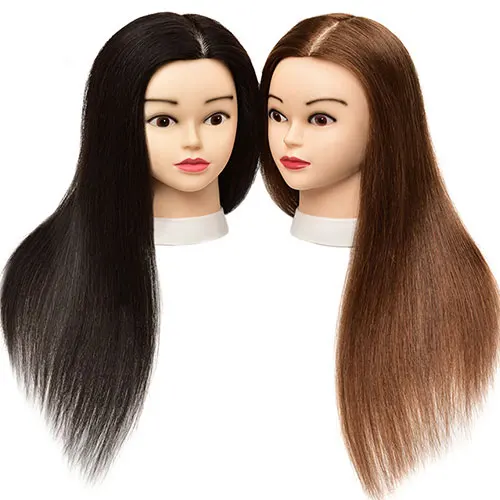
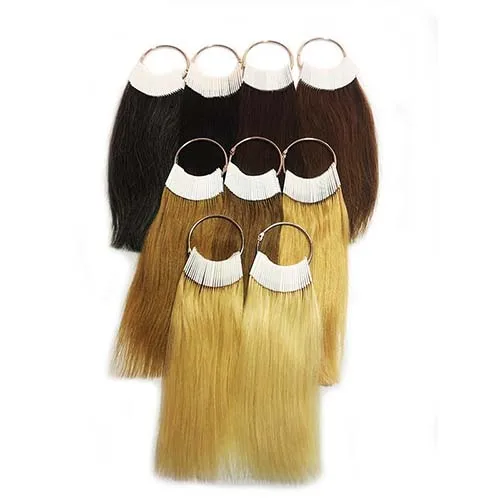
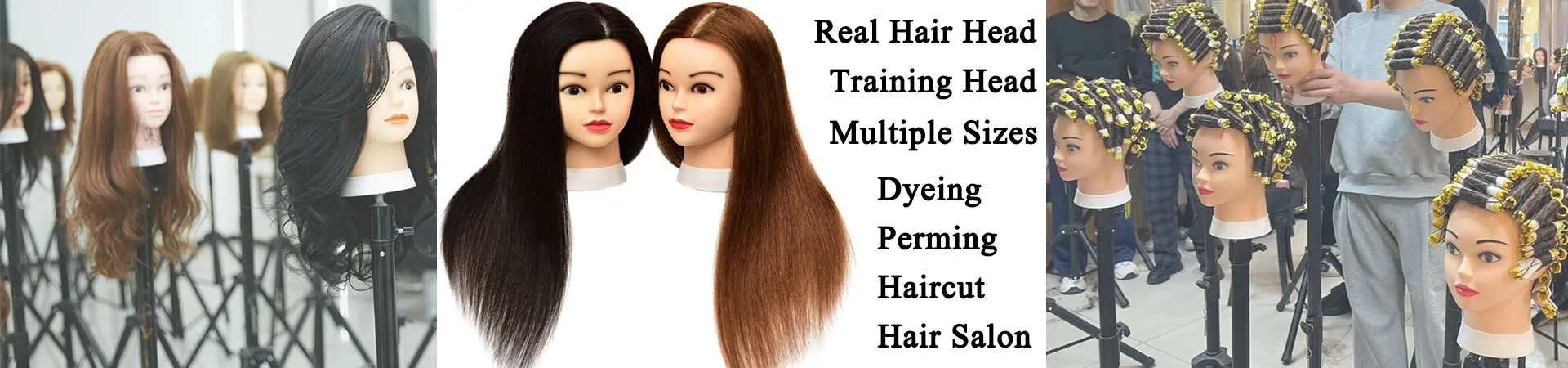
Hair salon mannequins are commonly categorized into three types: all-natural hair, mixed hair, and synthetic hair, each suitable for different practice needs.1. All-natural Hair Mannequin: Closest to Real Hair ExperienceFeatures: Made of 100% real human hair, with intact cuticle structure; can be permed, dyed, cut, and bleached; reacts almost identically to real hair.Suitable Scenarios: Advanced technique practice such as color mixing, hair dyeing, and precision cutting training.2. Mixed Hair Mannequin: Cost-Effective ChoiceFeatures: A blend of real human hair and high-temperature fiber (e.g., 50% real human hair + 50% synthetic fiber), retaining a certain degree of realism; heat-resistant; can be repeatedly styled.Suitable Scenarios: Daily braiding, updos, and curling iron styling practice; suitable for beginners as a transitional use.3. Synthetic Hair Mannequin: First Choice for BeginnersFeatures: Made entirely of synthetic fiber; low cost; rich colors; cannot be dyed but can be permed and cut.Applicable scenarios: basic haircutting practice, hairstyle display, window display.
Determining whether rework is needed after dyeing a live hair model hinges on assessing the reversibility of the problem and its impact on subsequent practice. Below are rework decision guidelines for four main categories of issues:Uneven Coloring: Localized areas without color or patchy shades.Remediable Situations: Only small areas (e.g., 1-2 strands) are under-colored, and the hair quality is intact.Slight differences in shade do not affect overall observation and cutting practice.Solution: Apply the original dye + low-volume hydrogen peroxide (10 vol) only to the uncolored areas and leave it on for 10 minutes for touch-up.Keep the hair damp during the process to avoid obvious boundaries between old and new color patches.Rework Required: Large areas of patchy color or overlapping color patches that cannot be concealed by localized touch-ups.Uneven coloring persists after touch-ups, affecting the judgment of color transition.Decision Recommendation: If it affects the review and improvement of dyeing techniques, rework is necessary; re-dye the entire hair.

Alibaba

Made in china

Amazon

Aliexpress

Google shopping